


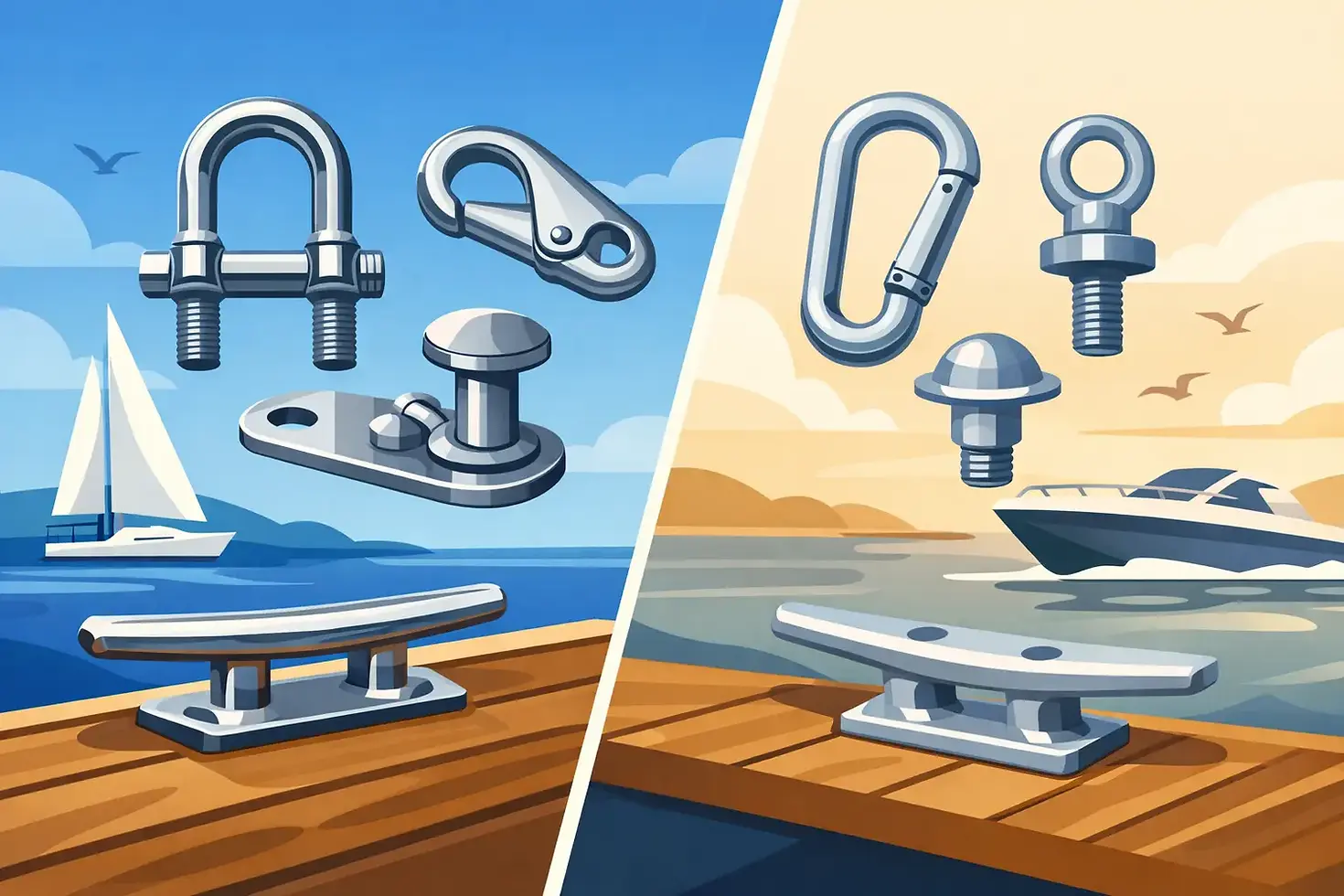
316 Stainless Versus Aluminum Hardware for Boats
A loose bolt on a fillet board, a stained rail mount, or a seized fastener can turn a simple deck job into a repair project. The choice between 316 stainless versus aluminum hardware matters because saltwater does not treat every metal the same. For boats that see offshore spray, wet bait, fish blood, sun, and long days at the dock, the right material keeps equipment secure and serviceable.
Aluminum has a legitimate place aboard a boat. It is light, readily machined, and often more economical for brackets, structures, and fabricated parts. But when the job is fastening a cutting board, securing a rod-holder mount, or installing an accessory that will live in wet salt air, 316 stainless steel is usually the harder-working choice.
316 Stainless Versus Aluminum Hardware: The Real Difference
The first point is simple: hardware is not the same thing as a large fabricated component. A lightweight aluminum frame or bracket may make sense where saving weight is the priority. Fasteners, washers, nuts, hinges, threaded inserts, and mounting plates face a different set of demands. They must hold clamp load, resist corrosion at tight joints, and still come apart when maintenance is required.
Type 316 stainless steel is an austenitic stainless alloy containing molybdenum. That added element gives it better resistance to chloride attack than common 304 stainless. Chlorides are everywhere on a saltwater boat: sea spray, dried salt crystals, bilge moisture, wet lines, and rinse water that never quite reaches a hidden joint.
Aluminum naturally forms an oxide layer that protects the metal under normal conditions. In marine use, that protection can be damaged by abrasion, trapped moisture, chemical exposure, or electrical activity. Bare aluminum can pit, oxidize, and leave white powdery corrosion around fittings. The result may not look serious at first, but corrosion around a fastener hole can grow until the mounting surface loses strength.
For equipment that is expected to take abuse on a working deck, material selection is not a cosmetic decision. It is part of the load path.
Why 316 Stainless Wins for Marine Fasteners
A quality 316 stainless bolt or screw offers excellent corrosion resistance, strong threads, and dependable holding power. It is well suited to hardware exposed to washdowns and occasional immersion, especially when paired with properly selected washers and mounting surfaces.
The benefit becomes clear on accessories that get handled constantly. A rail-mounted cup holder, bait tank topper, knife-sharpener assembly, or fillet board mount is pulled, leaned on, bumped by gear, and exposed to fish residue. Fasteners need to stay tight without turning orange, swelling with corrosion, or chewing up the surrounding material.
316 stainless also gives a clean, professional appearance that holds up far better than plated steel. Cheap zinc-plated hardware may look acceptable when installed, then rust quickly once the coating is scratched or salt finds its way into the threads. For a boat owner who expects years of offshore use, replacement hardware is wasted time and money.
At Offshore Products, 316 stainless hardware is used with marine-grade HDPE because the combination is built for the brutal Offshore Elements. The board resists moisture and UV exposure, while the fastening system is selected to keep the assembly secure through repeated use.
Strength Is More Than a Published Number
Aluminum can be strong for its weight, but it is a softer metal than stainless steel. Threads in aluminum are easier to strip, especially if a mounted accessory is repeatedly removed and reinstalled. Aluminum hardware can also deform under point loads, which reduces clamping force over time.
Stainless hardware is generally better suited to high-load, small-diameter fastening. Think of a board mounted to a rail, a heavy fish laid across a work surface, or a crew member using the table for leverage in rough water. The hardware has to resist vibration and keep its grip.
That does not mean every application needs the largest stainless bolt available. Oversized hardware can create its own problems, including unnecessary holes, concentrated stress, and a poor fit with thin mounting material. Correct diameter, thread engagement, backing support, and washer selection matter as much as the metal itself.
Where Aluminum Makes Sense on a Boat
Aluminum is not inferior by default. It is often the practical material for larger fabricated parts where weight matters. A properly coated or anodized aluminum bracket, frame, or mounting plate can perform well, particularly if it is designed to drain, avoid water traps, and stay isolated from incompatible metals.
It also makes sense when a part must be machined into a complex shape at a reasonable cost. Many boat components use aluminum because it balances strength, weight, availability, and fabrication speed.
The caution is at the connection points. If an aluminum component is secured with stainless hardware, the joint needs attention. Saltwater can turn dissimilar metals into a galvanic corrosion problem when they are electrically connected and wet with an electrolyte. In plain language, seawater can help one metal corrode faster at the expense of the other.
This is why good installation practice matters. Use appropriate isolating washers, bushings, gaskets, or coatings where required. Keep saltwater from sitting in the joint. Do not assume that stainless hardware automatically makes every aluminum installation marine-ready.
Galvanic Corrosion: The Problem Hidden Under the Washer
Galvanic corrosion is one of the biggest reasons boat owners find ugly damage beneath otherwise clean-looking hardware. The risk increases when stainless steel contacts bare aluminum in a wet environment. The aluminum is generally the more vulnerable metal in that pairing.
The solution is not to avoid stainless hardware. The solution is to design and install the joint correctly. A nonconductive barrier between materials can reduce electrical contact. Sealant used appropriately can limit water intrusion. Drainage prevents moisture from remaining trapped beneath washers, brackets, and mounting feet.
Avoid sealing a joint in a way that creates a permanent saltwater pocket. A fastener bedded carelessly can trap moisture just as effectively as it blocks it out. Installation should account for the component, the mounting surface, the expected exposure, and future service needs.
Salt buildup also deserves attention. A boat can be stored under cover and still suffer corrosion because dried salt attracts moisture from the air. A freshwater rinse after offshore use reaches far beyond appearance. Rinse hardware, rails, hinges, and the underside of mounted accessories where salt tends to collect.
The Trade-Offs: Weight, Cost, and Serviceability
Aluminum hardware is lighter. On a large build with dozens of fittings, weight savings may be meaningful. For a few board mounts or accessory fasteners, however, the difference is usually too small to outweigh the maintenance benefits of 316 stainless.
Aluminum is often less expensive up front, especially for custom-machined pieces. But lower initial cost can disappear when corrosion forces replacement, damages the mounting surface, or turns a simple removal into drilling out seized hardware.
316 stainless costs more, and it is not maintenance-free. Stainless can stain or develop surface tea staining in harsh environments. It can also gall, meaning threaded stainless parts may seize during tightening. Galling is more common when dry stainless threads are run quickly under load.
Use quality hardware, avoid overtightening, and apply a suitable marine-grade anti-seize compound when the application calls for it. Tighten bolts evenly and do not reuse distorted lock nuts or damaged fasteners. If a fitting must be removed regularly, serviceability should be part of the material decision from the start.
Choosing Hardware for Fillet Boards and Deck Accessories
For cutting boards, bait tables, lobster gauges, rail accessories, and other working-deck equipment, prioritize 316 stainless fasteners where corrosion resistance and secure mounting are nonnegotiable. Pair them with UV-protected HDPE or a properly isolated metal mounting surface. Use backing plates or adequate washers when load is spread across a thin panel.
Check the installation after the first few trips. Vibration, thermal movement, and settling can affect clamp load. Then make hardware inspection part of normal boat care: look for loose fittings, white corrosion around aluminum, staining, cracked sealant, and water trapped under mounting points.
The best choice is rarely about choosing one metal for every part. Use aluminum where low weight and fabricated shape matter. Use 316 stainless where threads, fasteners, and exposed marine hardware must keep working after salt, sun, and hard use have tested everything else.
When you build or upgrade a working surface for the deck, choose materials that let you spend your next offshore day cleaning fish, rigging bait, and running the boat - not fighting corroded hardware.


Comments