


Bait Cutting Table for Boats That Works Offshore
A bait cutting table for boats earns its space when the bite turns on, the deck is wet, and there is no time to fight loose gear or work around a flimsy surface. It needs to hold bait, knives, fish, and hard use without staining, flexing, corroding, or becoming another problem on deck. A household cutting board may survive a weekend at home. It is not built for salt spray, UV exposure, rolling seas, and a full day offshore.
What a Bait Cutting Table for Boats Must Handle
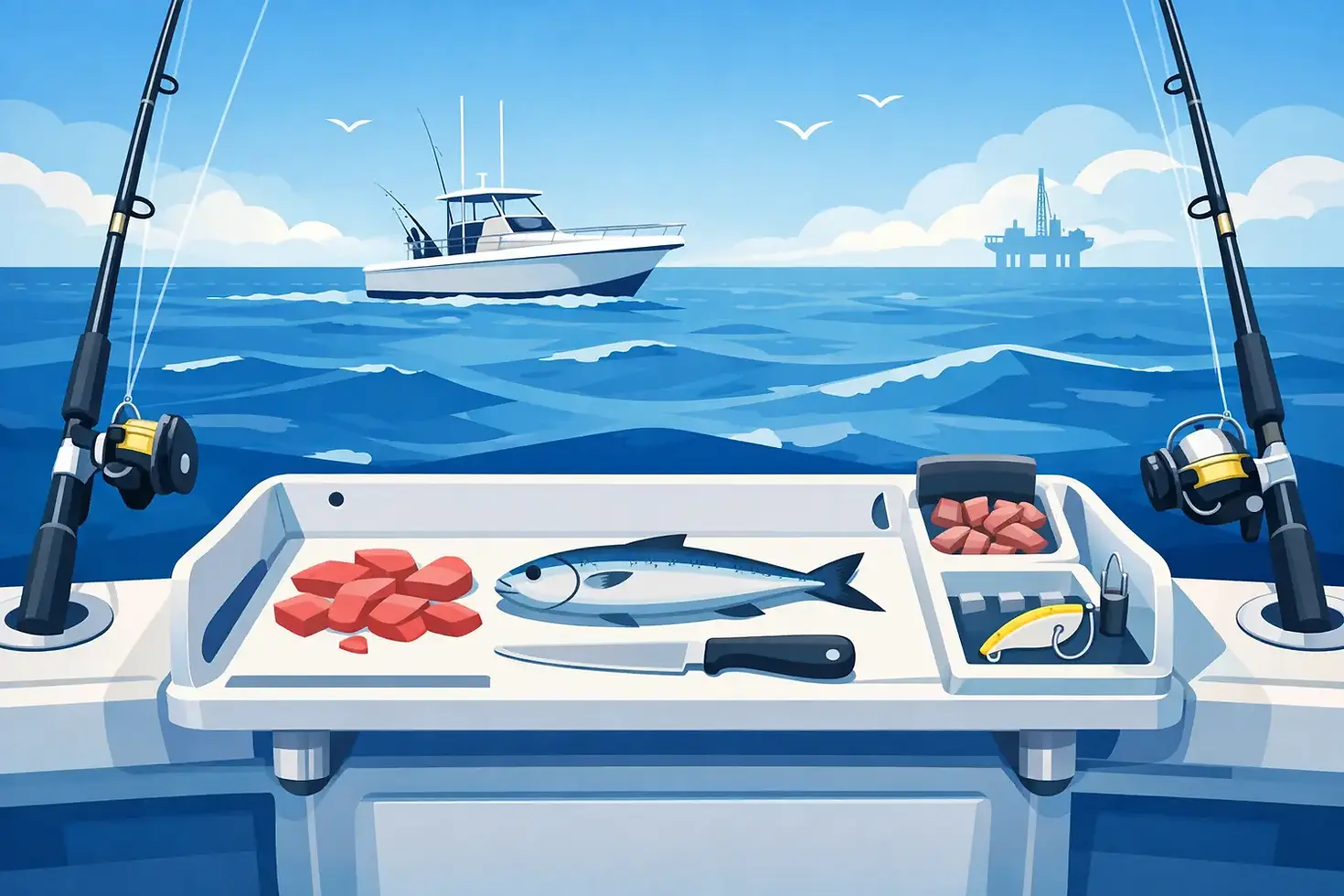
A proper onboard cutting table is working equipment. It gives anglers a stable place to cut squid strips, portion sardines, rig ballyhoo, prepare chum, and clean a quick catch without taking over the cockpit. The board should be large enough for the bait and fish you handle, but not so large that it blocks a walkway, rod holder, hatch, or access to the transom.
Material is the first place to look. UV-protected King ColorCore HDPE is made for hard marine use. It will not absorb water like wood, needs no varnish or sealing, and stands up to repeated washing. It also keeps its color and structure far better than low-grade plastic when it spends season after season under direct sun. For a board that sees blood, bait oils, fish slime, and saltwater, that matters.
Hardware matters just as much. Mounts, fasteners, and support components made from U.S. 316 stainless steel offer stronger corrosion resistance than common stainless hardware in a saltwater environment. Cheap hardware can look fine at the dock, then pit, bind, or leave rust streaks after sustained exposure. A bait station is only as dependable as the hardware that holds it to the boat.
The working surface should also be easy to wash down. Smooth HDPE allows fast cleanup with fresh water and a suitable marine cleaner. If you use the board for bait and food preparation, clean it thoroughly between tasks. Many serious crews keep bait preparation and meal preparation separate. That is not overkill. It is simply better sanitation and a cleaner way to run the boat.
Choose the Right Board Size and Layout
Board size depends on how you fish and where it will mount. A 24-inch board is a practical choice for many center consoles, bay boats, and smaller cockpits where space is limited. It provides enough room for routine bait work while keeping the rig compact. A 30-inch board gives more elbow room for larger baits, full fish, lobster work, and longer preparation sessions.
Do not choose a larger surface just because it sounds better. On a narrow deck, an oversized table can interfere with movement when someone is fighting a fish or moving around the cockpit. Measure the actual mounting area, then account for rod holders, rail clearance, lid swing, seating, and how the crew moves through the space. A board that fits the boat is more useful than a bigger board that stays in the garage.
Layout should match the work. Some anglers want a clean, open cutting area with no interruptions. Others benefit from a built-in knife sharpener, a raised edge, a ruler, or a pole-holder mount that keeps the board at the correct working height. The best setup is not universal. A boat used for offshore trolling has different needs from a lobster boat, a charter vessel, or a family fishing boat that occasionally runs outside.
Think About the Knife Before You Need It
A dull bait knife makes sloppy cuts and creates unnecessary risk when the deck is moving. An integrated knife sharpener keeps a useful tool close to the work surface, where it belongs. It is a practical feature for crews who regularly cut squid, mackerel, bonito, and frozen bait blocks.
That said, a sharpener should not crowd the cutting area or create a snag point. Look for a board layout that keeps tools organized without reducing usable workspace. The goal is simple: cut bait efficiently, rinse the board, and get back to fishing.
Mounting Determines Whether the Table Is Useful
A good board material cannot overcome a poor mounting plan. The table must sit securely at a comfortable height and stay put when the boat rocks, wakes hit, or the crew leans into a tough bait cut. Before ordering, identify exactly how and where the table will attach.
Rod-holder-mounted tables are popular because they are removable and use hardware already installed on many fishing boats. They work well in cockpits and along gunwales, provided the rod holder is sound and positioned to support the load. Rail-mounted configurations can be a better option where rod holders are unavailable or the work area needs to sit in a specific location.
Check the rail diameter, rod-holder angle, mounting depth, and clearance below the board. A mount that looks right in a product photo may not match your boat's rail, coaming, or rod-holder layout. Also consider the direction the board faces. You want to work with your body braced against the boat, not standing sideways with a knife while the vessel is underway or drifting in a chop.
If you plan to leave the board installed while running, verify that it will not obstruct controls, safety gear, boarding access, or visibility. Many boat owners prefer a removable station that can be deployed for fishing and stored when the deck needs to stay clear. It depends on the boat, but removable does not have to mean weak when the mount and hardware are built correctly.
Marine Materials Beat General-Purpose Plastic
The difference between a marine cutting table and a basic plastic board shows up over time. Household-grade boards can warp in heat, discolor under UV exposure, and develop deep grooves that hold odor and residue. Wood requires ongoing care and can retain moisture. Lightweight folding tables may be convenient, but their legs and hinges are not designed for saltwater abuse or the movement of an offshore deck.
King ColorCore HDPE is a purpose-built answer for marine work surfaces. It is durable, color-through, and suited to repeated exposure to water and sun. Pair it with 316 stainless steel hardware and you have a setup designed for the brutal Offshore Elements rather than a temporary workaround.
This does not mean any HDPE board needs no care. Rinse it after use, especially after cutting oily bait or handling fish blood. Wash it regularly, inspect mounting hardware, and avoid using it as a step or an improvised lever. Proper maintenance is simple, but it extends the life of every piece of gear on the boat.
When a Custom Bait Table Makes Sense
Off-the-shelf dimensions work for many boats. Custom fabrication makes sense when your boat has an unusual rail, an angled mounting point, limited deck space, or a specific workflow that standard boards do not address. A custom board can be made around a particular footprint, shape, mounting location, or accessory requirement.
For charter operators and serious offshore crews, customization can also improve the way the boat presents itself. Adding a boat name, logo, or professional text creates a finished look while keeping the equipment functional. The important part is that customization should serve the vessel, not just decorate it. A custom shape that clears a hatch or keeps a cockpit lane open is far more valuable than cosmetic detail alone.
Offshore Products builds Made in the USA marine work surfaces for boat owners who need that kind of fit. Whether the requirement is a compact bait station, a larger fillet board, or a nonstandard mount, start with measurements and a clear description of how the board will be used. Good fabrication begins with real dimensions, not guesses.
Set Up the Work Area for Cleaner, Safer Fishing
Place the table where rinse water can drain away from the work area and where bait scraps will not end up in seat cushions, tackle compartments, or foot traffic. Keep a dedicated bait knife nearby, along with a rinse source and a container for waste. The fewer times you cross the deck carrying a blade, chum bag, or dripping bait, the cleaner and safer the cockpit stays.
A well-built bait table does not need to be complicated. It needs the right material, secure marine-grade mounting, enough working room, and a layout that matches the way you fish. Measure the boat before choosing the board, then choose equipment that is ready to work when the water, weather, and bite stop being forgiving.


Comments